
About
I've spent my life goingplaces I've never been.
Companies, products, classrooms, books, countries, music. And somewhere along the way I found out I'm unusually good at taking other people with me.
Companies, products, classrooms, books, countries, music. And somewhere along the way I found out I'm unusually good at taking other people with me.
Since I was 24 I've been getting things moving. Companies, products, an incubator, a community, books, songs — the form changes, the habit doesn't. When I don't know how to do something, I find the simplest version I can actually do, do it, and learn from what happens. A few decades of that adds up to a lot of territory.
I founded FastPencil and sold it to Courier Corp in 2011 — my one exit as an operator. After that I built a consulting practice of my own, advising startups and small businesses for years, paid in cash and often equity. Three of those clients went on to billion-dollar exits — an IPO, a merger, and a private-equity deal. I was part of the team, not the reason it happened, and the equity meant I shared in the wins. Along the way I launched the startup incubator at San José State University, and I've been a professor there since 2018 — teaching entrepreneurship, operations, and international business to thousands of students so far. I'm still in the classroom.
What ties it together isn't a job title. I'm not exclusively a consultant, a strategist, a coach, or a fractional executive. I'm the builder when building is required. The coach when coaching is required. The advisor, the trainer, the professor — each when that's what the moment needs, and not a minute longer. Someone tells me where they want to go, and I bring whichever one creates the next useful movement.
My work sits at the intersection of innovation, strategy, and execution. That's an easy sentence to write and a hard one to live: most people are good at one of the three and quietly hope the other two sort themselves out. They don't. The interesting work is always in the seams between them — where a good idea meets a real market and something has to give.
I still build — right now, every day. I run a venture studio, Custany, and the startup I'm building inside it is Radi8, an AI marketing platform. Before that came Foclarity, a go-to-market tool for CEOs. I build the things I recommend rather than just recommending them. And I wrote What Holds Up the Roof to put twenty-five years of that thinking into one place anyone can actually finish.
These days I work with organizations that have something important that isn't moving, and with people who have somewhere they've wanted to go for a long time. Twelve weeks at a time. Everything rearranges itself as you move through it — so we move.
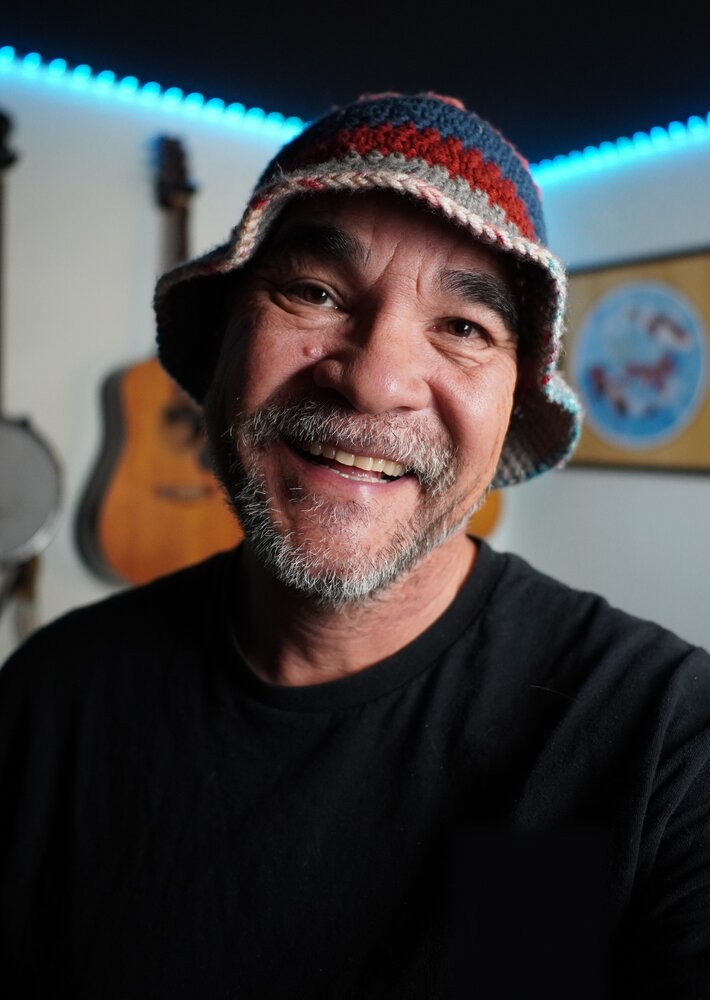
The best evidence that someone can help you build something is that they're still building things themselves.
The AI marketing platform I'm building right now, and use every day — also the engine behind the execution when I build with clients.
See Radi8 →The studio the building happens inside. Radi8 is its current product — the venture-studio pattern I keep coming back to: build it, establish it, hand it off.
See Custany →A go-to-market tool for CEOs, built out of the same frustration that started most of my companies: the advice existed, the system didn't.
The community and podcast I built for people making things — peer groups, workshops, and candid conversation from people currently living it.
Join it free →The four principles of entrepreneurship, told as a business fable — a founder learning what keeps a business standing when the plan falls apart.
Read about the book →San José State had wanted an incubator for years and couldn't get it started. I launched it over a summer: 1,000+ members and $200K+ distributed in year one, 3,000+ members by year three. Then I handed it to the team and left.
A professor at San José State since 2018, still teaching business students — which is where I learned to explain this stuff without hiding behind the jargon — and that the fastest way to teach something is to get people doing it.
And these days a visible body of work beats a resume — it's evidence, not claims. So I help people build both: the work itself, and the reputation that makes people trust them before the first conversation.
Worth knowing before you book a call, so you can decide whether this is the kind of help you want.
I'll tell you what I actually think, early, including when the answer is "this isn't the problem you should be solving." You can do whatever you like with it — but you won't have to guess where I stand.
I've seen enough beautiful strategy die in a drawer. Everything we decide has to survive contact with a real person and a real calendar, or it isn't a plan — it's a slide.
I like the room, the whiteboard, and the argument. I'd rather be the person you call when something breaks than a consultant who shows up for the readout.
Book thirty minutes and tell me where you want to go. No pitch — just a straight read on whether I'm the right person to go there with you.
Book 30 minutes with me