Almost everything a founder calls a marketing problem is a strategy problem wearing a disguise. Here's how I find the real one, help you make the call, and turn it into something the business can actually run.
These are the six sentences I hear most often. In every one of them, the thing being described is a symptom — and the fix lives one level down.
Nothing here is exotic. It's just done in the right sequence, with someone in the room who has made these calls before and isn't afraid to be direct about them.
We start with the actual evidence: your pipeline, your wins and losses, what customers say in their own words. Not a brand workshop — a hard look at where value is created and where it's leaking. Most engagements find the real constraint in the first two weeks, and it's rarely the one you brought me in for.
Strategy is choosing what you're not going to do. We name the customer, the problem, and the promise — and write it down so it stops being re-litigated in every meeting. This is the uncomfortable part, and it's the part that changes everything downstream.
A decision on paper isn't worth much. We put the new positioning in front of real buyers fast — in conversations, in the pitch, on the site — and watch what happens. If it doesn't move, we say so and adjust, instead of defending it for a quarter.
Then we turn what worked into a motion the team can run without me: a clear message hierarchy, a channel or two you're genuinely good at, and a cadence for reviewing them. The goal is always that you keep the engine, not that you keep the advisor.
Advice evaporates. Artifacts don't. Everything we work on leaves behind something concrete the business owns.
One page: who you're for, what you replace, and why you win. Short enough that the whole team can repeat it from memory.
Segments and buying triggers drawn from evidence rather than the persona deck someone made in a hurry two years ago.
The one line, the three proof points, the objections — so the site, the pitch, and the sales call finally say the same thing.
A focused motion sized to your stage: the channels you'll actually run, in what order, with what you expect each to do.
The weekly and monthly rhythm that keeps the strategy alive after the excitement of the offsite wears off.
The one that compounds. After a few months of making these calls together, you make the next ones faster and with less second-guessing.
And these days a visible body of work beats a resume — it's evidence, not claims. So I help founders build both: the business, and the reputation that makes people trust them before the first conversation.
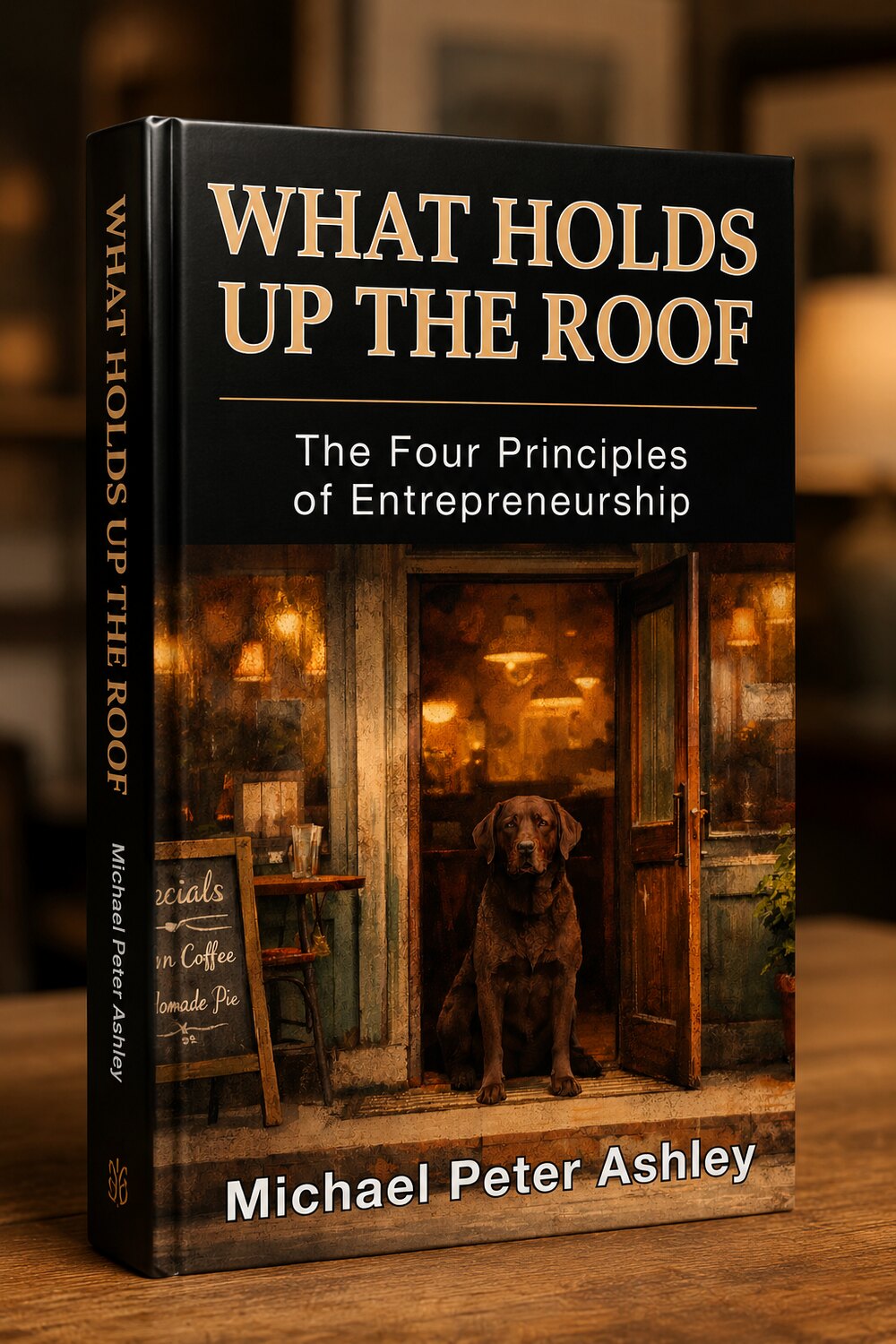
This approach isn't a framework I invented for a slide. It's twenty-five years of building and advising, distilled into four principles — and told as a business fable in my book, What Holds Up the Roof. If you want the thinking before you want the help, start there.
Book thirty minutes. Tell me what's stuck, and I'll tell you what I think is actually going on — whether or not we ever work together.
Book 30 minutes with me